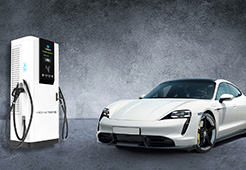


While new energy vehicle (NEV) owners are enjoying the convenience of charging with off-peak electricity at night, a sharp "crack" suddenly rings out, and the charging pile circuit breaker trips without warning — this is a common headache for many EV households across China. According to data from the China Electric Vehicle Charging Infrastructure Promotion Alliance, the total number of public and private charging piles in China exceeded 6 million in 2024, but tripping issues account for as high as 37% of all equipment failure complaints, making it the top pain point affecting user experience.
Below are the six core causes of charging pile tripping, plus full diagnosis and solution guidelines:
01 7kW Charging Piles Mismatched with 40A Circuit Breakers
"A 7kW charging pile is paired with a 40A circuit breaker, theoretically the 32A rated current has sufficient margin, so why does it still trip?" This is a frequently discussed question on Chinese knowledge platform Zhihu. Li Ming (pseudonym), technical director of a NEV manufacturer, pointed out in an interview: "In actual charging scenarios, the instantaneous current can reach 1.3 times the theoretical value." Take the common 220V/7kW charging pile as an example: its rated current is calculated as power ÷ voltage (7000W ÷ 220V ≈ 31.8A). However, during the fast charging stage when the battery is low, the Battery Management System (BMS) will actively request higher current. Coupled with the voltage drop caused by line resistance, the actual current carried by the circuit breaker often exceeds 40A.
Real Case
The experience of Mr. Wang, an EV owner in Shanghai, is typical. His 7kW charging pile was equipped with a 40A circuit breaker, which worked normally for the first two months, then gradually started tripping after 3 hours of charging, and eventually cut off after only half an hour. "The circuit breaker casing was hot to the touch. The problem was completely solved after I replaced it with a 50A Schneider circuit breaker," Mr. Wang shared in an NEV owner group, confirming the importance of leaving sufficient margin for circuit breaker selection. According to China National Standard Code for Design of Low-Voltage Electrical Installations (GB50054), the rated current of the switch should be no less than 1.25 times the calculated current, i.e. 31.8A × 1.25 = 39.75A. Theoretically, a 40A circuit breaker just meets the standard, but in actual use, 50A specification is recommended. Especially when the line length exceeds 30 meters, the current compensation effect caused by voltage drop should be considered.
Heat Dissipation Dilemma
Circuit breaker tripping is also closely related to the installation environment. A third-party testing institution’s survey of 100 household charging pile installation points found that 38% of distribution boxes have poor heat dissipation. "Some users install the circuit breaker in a closed weak current box for aesthetics. In summer, the internal temperature exceeds 60°C, and the thermal tripping characteristic of the circuit breaker will be triggered in advance," said veteran electrician Master Liu. The most extreme case he handled was a car owner who embedded the distribution box in the wall, causing the circuit breaker to burn out continuously. "The correct approach is to ensure that there is more than 5cm of heat dissipation space above and below the distribution box, and avoid direct sunlight."
02 6mm² Copper Wires Cannot Support 7kW Piles
"National standard 6mm² copper wires can clearly carry 48A current, why do they overheat when powering a 7kW charging pile?" This is another common cognitive misunderstanding. China National Standard Code for Acceptance of Construction Quality of Electrical Installations in Buildings (GB50303) clearly stipulates that the wire ampacity should be corrected according to the laying method: when laid in pipes, the ampacity should be discounted by 20%, meaning the actual safe ampacity of 6mm² copper wire is 48A × 0.8 = 38.4A, which barely meets the demand of 7kW charging piles. In reality, however, many installers use non-standard wires to save costs. A random inspection on an e-commerce platform showed that the actual cross-sectional area of so-called 6mm² copper wires is only 4.8mm², directly reducing the ampacity by 25%.
Wire Diameter Selection Formula
Professional electrical engineers recommend using a "power-distance-wire diameter" quick calculation table: 6mm² copper wire is optional for 7kW charging piles within 30 meters, 10mm² wire is required for 30-50 meters, and 16mm² wire should be used for distances over 50 meters. The technical director of a charging pile installation company in Beijing explained: "Excessively long lines will produce voltage drop. When the drop exceeds 5%, the charging pile will automatically increase the current to compensate for power, leading to line overload." He gave an example: a 50-meter long 6mm² copper wire has a resistance of about 0.14Ω, and the voltage drop generated at 32A current is 4.48V, which is close to the 2% safety threshold of 220V voltage. If non-standard wires are used, the voltage drop may exceed the standard and trigger protection.
Joint Process
More easily overlooked than wire diameter is the treatment of wiring terminals. "90% of line faults occur at the joints." Master Liu showed a burned wire lug: "This joint was not crimped firmly, resulting in excessive contact resistance. The temperature soared to 150°C during charging, eventually causing the circuit breaker to trip." Standard processes require the use of cold-pressed terminals matching the wire diameter. After crimping, double protection with insulating tape and heat shrink tube is required, and conductive paste should be applied to key nodes to reduce contact resistance. The installation standard of a NEV manufacturer even requires that the temperature rise of charging pile line joints shall not exceed 30°C above ambient temperature.
03 Essential Difference Between 30 RMB and 300 RMB Circuit Breakers
Searching for "40A circuit breaker" on an e-commerce platform, prices range from 28 RMB to 300 RMB. "The price difference is mainly reflected in the contact material and arc extinguishing system," said Engineer Zhao from an electrical brand. After disassembly and comparison, he found that the contacts of cheap circuit breakers are mostly brass plated with silver, with a thickness of less than 0.1mm, while branded products use silver-nickel alloy contacts with a thickness of 0.5mm. "Brass contacts are easy to oxidize under high current, and the contact resistance soars from the initial 5mΩ to 50mΩ, leading to exponential growth in heat generation." He revealed that the life test requirement for branded circuit breakers reaches 10,000 on-off cycles, while inferior products can only withstand 1,000 cycles.
RCD Selection
Charging piles must be equipped with Residual Current Devices (RCD), but there is a huge safety difference between 1P+N and 2P RCDs. 1P+N RCD only sets protection on the live wire, and the neutral wire is always on, so it cannot cut off power when neutral wire leakage occurs; 2P RCD cuts off both live and neutral wires at the same time, with better safety. The newly revised Technical Standard for Distributed Electric Vehicle Charging Facilities (JGJ/T 486) in 2024 clearly requires that the power supply end of the charging pile should adopt a 2P circuit breaker with leakage protection, with a rated residual operating current of no more than 30mA and a breaking time of no more than 0.1 seconds.
Brand Trap
A random inspection by the State Administration for Market Regulation (SAMR) in the second quarter of 2024 showed that 25% of special circuit breakers for charging piles are unqualified, with main problems concentrated in tripping characteristics and temperature rise items. A well-known brand dealer revealed: "Some merchants sell C-curve circuit breakers as D-curve products. C-curve is used for lighting circuits, while D-curve is suitable for inductive loads such as motors. Using the wrong type for charging piles will cause frequent tripping." Consumers can identify through the circuit breaker model: for example, "DZ47-63 D40" means D-curve 40A, while "C40" is C-curve for lighting.
04 Tripping Caused by BMS System
"Sometimes the problem is not with the pile, but with the car." Chen Gong, technical supervisor of a BYD 4S store, encountered a special case: a customer's Han EV tripped every time it charged to 70%, even after trying three different charging piles. The final test found that a single cell in the battery pack had abnormal voltage, and the BMS actively cut off charging to protect the battery, which appeared as circuit breaker tripping. "Today's smart charging piles communicate with the vehicle BMS in real time, and any abnormality on either side will terminate charging," Chen explained. When the battery temperature difference exceeds 5°C or the single cell voltage difference is greater than 50mV, the BMS will trigger the protection mechanism.
Charging Protocol Conflict
Communication protocol compatibility issues between different brands of charging piles and vehicles may also cause tripping. A 2024 test by Consumer Reports China showed that among 15 brand combinations, 3 groups experienced charging interruption, mainly concentrated in the matching of new power vehicle brands and third-party charging piles. "Some charging piles have a low CAN communication timeout threshold, and when the vehicle BMS response is delayed, it will mistakenly identify a fault and cut off power," said a technical director of a charging operator. He suggested that when encountering compatibility problems, users can try to upgrade the charging pile firmware, or select "standard charging mode" instead of "fast charging mode" in the vehicle settings.
Battery Equalization Problem
Older vehicles are more prone to charging tripping. When the battery is used for more than 3 years or the cycle count reaches 800 times, the single cell capacity difference increases, and voltage imbalance occurs in the late charging stage. A battery maintenance expert revealed: "We disassembled a battery pack that had driven 150,000 kilometers, and the single cell capacity difference reached 20%. After charging to 80%, the BMS will repeatedly start and stop equalization, resulting in current fluctuations that trigger circuit breaker protection." In this case, rebalancing the battery or replacing aging cells can effectively solve the tripping problem.
05 Easy Tripping During Peak Electricity Consumption
"It always trips when I charge at 7 pm, but it's fine when I charge in the middle of the night." This is a common experience for many users. According to State Grid data, during the summer peak electricity consumption period from 20:00 to 22:00, the residential voltage may drop to 198V (standard 220V ± 10%). At this time, to maintain power output, the current of the charging pile will increase from 32A to 35.5A (7000W ÷ 198V), causing the 40A circuit breaker that barely meets the demand to trip. A power supply station staff suggested: "Buy a smart circuit breaker with voltage monitoring function, which automatically cuts off when the voltage is lower than 198V and restarts after the voltage recovers."
Harmonic Interference
Harmonic pollution in the power grid will also affect the operation of charging piles. A test by a university power laboratory found that when the Total Harmonic Distortion (THD) of the power grid exceeds 5%, the Power Factor Correction (PFC) circuit of the charging pile will be abnormal, manifested as current waveform distortion, triggering the overload protection of the circuit breaker. This situation is particularly prominent in old communities, because there are a large number of inductive loads such as air conditioners and refrigerators in the power grid, which will generate 3rd and 5th harmonics. Solutions include installing a passive filter (about 300 RMB per unit), or choosing a charging pile with harmonic suppression function. The latter is 20% more expensive, but can significantly reduce the tripping probability.
Poor Grounding
The grounding resistance of charging piles is required to be no more than 4Ω, but actual measurements found that 23% of installation points have excessive grounding resistance. The construction records of a charging pile installation company in Shenzhen showed that the worst case had a grounding resistance of 28Ω, far exceeding the safety standard. "Poor grounding will cause misoperation of leakage protection," explained the company's technical director. When the equipment shell is electrified, the leakage protector will trip within 0.1 seconds under normal circumstances, but if the grounding resistance is too large, the leakage current cannot reach the action threshold (usually 30mA), which will instead cause the protector to trigger frequently by mistake. Standard grounding construction should use galvanized angle steel (50×50×5mm) driven vertically 2.5 meters underground, and connected to the charging pile grounding terminal with 40×4mm galvanized flat steel.
06 Hidden Tripping Risks in Construction Details
"30% equipment, 70% installation", the old saying in electrical construction is also applicable to charging pile installation. A third-party supervision company found that 67% of 100 charging pile installation projects had non-standard problems during acceptance, among which the most common were "reverse connection of live and neutral wires" and "loose connection of PE (protective earthing) wires". "Reverse connection of live and neutral wires has little impact on ordinary appliances, but the leakage protector of the charging pile is polarity-sensitive, and reverse connection will lead to protection failure or misoperation." The company's electrical engineer showed a typical case: an installer connected the live wire to the N terminal and the neutral wire to the L terminal, causing the charging pile to trip as soon as it started, and the wiring error was not found after three days of repeated inspection.
Pipe Laying Specification
The selection of pipe material for buried lines also hides hidden dangers. Although PVC pipes are low cost, they will release plasticizers when the temperature exceeds 60°C, leading to a decrease in insulation performance. The standard practice should be to use KBG galvanized steel pipes, especially for parts crossing walls and floors. An investigation into a charging pile fire accident in a Shanghai community showed that the use of low-quality PVC pipes softened and deformed at high temperatures in summer, leading to wear and short circuit of the wire insulation layer, causing circuit breaker tripping and line burning. In addition, the cross-sectional area of the wire should not exceed 40% of the internal cross-sectional area of the pipe when laying, otherwise it will accelerate aging due to poor heat dissipation.
Waterproof Rating
The IP protection rating of outdoor charging piles should be at least IP54 (dustproof, splash-proof), but many private charging piles install indoor equipment directly in the open air to save costs. The experience of Ms. Lin, an EV owner in Guangzhou, is alarming: rainwater seeped into the charging pile during a typhoon, causing a short circuit trip, and the main board was found to be rusted during maintenance. "Standard outdoor installation should add a rain shelter, the bottom of the charging pile is more than 30cm above the ground, and the cable entrance is treated with a waterproof bend," according to the installation manual of a charging pile manufacturer. Outdoor equipment should also be equipped with a Surge Protection Device (SPD) to resist lightning strikes and induced overvoltage.
07 Full Process Guide for Detection and Transformation
Faced with the complex causes of charging pile tripping, car owners need a set of scientific troubleshooting methods. We summarize the four-step diagnostic method derived from traditional Chinese medicine (observation, listening/smelling, inquiry, pulse-taking) to help quickly locate the problem:
Observation: Check for abnormal phenomena during charging. Is there any abnormal noise before the circuit breaker trips? What is the flashing pattern of the charging pile indicator? Is the real-time current displayed on the mobile app fluctuating? A technical support manager of a charging pile brand revealed: "Current fluctuation exceeding ±5A usually indicates a BMS communication problem, while a continuously and steadily rising current may be line overload."
Listening/Smelling: Smell whether there is a burnt smell in the distribution box and charging pile. This is an intuitive way to judge line overheating. "Once a car owner reported smelling plastic when charging but didn't pay attention, which eventually led to the circuit breaker burning out," Master Liu suggested. Before each charge, the distribution box should be checked, and if there is carbonization on the surface of the circuit breaker, it must be replaced immediately.
Inquiry: Confirm key parameters with the installer, including wire cross-sectional area, circuit breaker specification, grounding resistance value, etc. A standard installation report will record these data in detail. If the installer cannot provide them, be alert to construction quality. A survey by the Consumer Association showed that 72% of tripping problems can be detected in advance by checking installation parameters.
Pulse-taking: Measure the temperature of key parts with an infrared thermometer. Under normal circumstances, the temperature of the charging pile shell should not exceed 20°C above ambient temperature, and the temperature rise of the circuit breaker should not exceed 40°C. An electrical testing engineer suggested: "Measure the temperature of the wire joint 1 hour after charging, and if it exceeds 70°C, stop charging immediately for inspection."
Hierarchical Transformation Plan
According to the cause of the fault, we provide three levels of solutions:
Basic level (300-500 RMB): Replace with D-curve 50A circuit breaker + 30mA RCD, check and retighten the wiring terminals. Suitable for tripping caused by improper circuit breaker selection or poor contact.
Advanced level (1000-2000 RMB): Upgrade to national standard copper wire of 6mm² or above, install SPD, and rebuild the grounding system. Suitable for problems caused by line aging, poor grounding or power grid fluctuation.
Professional level (3000-5000 RMB): Replace with a smart charging pile (with voltage and current monitoring, remote diagnosis function), install harmonic filter, and perform battery equalization maintenance. Suitable for vehicle BMS faults or complex grid environments.
08 From Passive Protection to Active Early Warning
With the accelerated penetration of new quality productivity in the energy field, charging pile safety technology is upgrading to intelligent and connected direction. The Technical Requirements for Smart Charging Facilities released in 2024 has clearly listed "fault early warning" as a necessary function. An AI charging pile developed by a leading charging equipment manufacturer can predict potential tripping risks 15 days in advance by analyzing current waveform characteristics, with an accuracy rate of 89%. "We have implanted a neural network algorithm in the equipment, which can identify 12 typical fault precursors," said the company's R&D director. This predictive maintenance technology can reduce the failure rate by 60% and cut operation and maintenance costs by 40%.
Policy Specifications
The new national standard Safety Specification for Electric Vehicle Charging Facilities, which will be implemented in January 2025, will put forward stricter requirements for installation and construction. The new regulation requires that charging piles must have "real-time temperature monitoring" and "arc fault protection" functions, and the circuit breaker selection must pass the overload test of 1.5 times the rated current. Industry experts predict that after the implementation of the new regulation, about 30% of the existing charging piles in the market will face elimination or transformation, but this will fundamentally solve the long-standing safety hazards.
Insurance Mechanism
In response to the safety risks of charging piles, many insurance companies have launched special insurance products. A property insurance company's "Charging Safety Insurance" covers equipment damage, third-party liability and other protections, with an annual premium of only 200 RMB, but can cover losses of up to 500,000 RMB. "There will be a professional inspection before insuring, which helps car owners find potential hidden dangers, which is equivalent to a free safety inspection," said the product负责人. Data shows that the tripping rate of insured users is 58% lower than that of uninsured users, confirming the value of risk management.
Final Note
Charging pile tripping may seem like a small problem, but it is actually a microcosm of the safety system of the NEV industry chain. From the millimeter-level contact gap to the thousands of meters of power grid transmission, defects in any link may cause a chain reaction. With the popularization of 800V high-oltage platform models and the development of ultra-fast charging technology, the safety challenges of charging systems will become more severe. For car owners, mastering basic electrical knowledge, choosing compliant products and professional installation, and conducting regular safety inspections are the fundamental ways to stay away from tripping troubles. As a veteran electrician said: "In the new energy era, everyone needs to take an electrical safety class." (Total words: 3982)