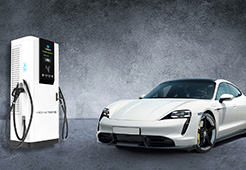


Recently, I've received many private messages from fans complaining: "My electric car can run 500 kilometers when fully charged at home, but only 400 kilometers when fully charged at a fast-charging station outside. Did the charging pile manufacturer secretly adjust the power?" "Last time I charged to 100% at a fast-charging station, but it ran out of power after less than half the distance. Is this pile falsely marked?" Similar doubts are increasing, and some bloggers even revealed that "charging pile manufacturers can adjust the charging coefficient, making car owners seem to have a full charge, but actually only 70% to 80%". For a time, "charging pile power adjustment" has become a sensitive topic among car owners, and many people have begun to suspect that the charging piles around them are hiding something fishy. As car owners, should we worry about the charging piles being "tampered with"? Is the power adjustment of charging piles a technical necessity or an underhand operation? Why do we always feel that the charging pile is charging "virtual electricity"? In this article today, we will start from the technical principles, disassemble the underlying logic of charging pile power adjustment, comprehensively analyze the real reasons for "incomplete charging", and help you avoid the pitfalls of charging. I. Technical Principles of Charging Piles: From AC to DC, the Underlying Logic of Power Adjustment To understand the truth about power adjustment, we first need to understand the differences in power adjustment logic between different types of charging piles. Currently, electric vehicle charging piles on the market are mainly divided into two categories: AC slow-charging piles and DC fast-charging piles, with vastly different underlying logics for power adjustment. 1. AC Charging Piles: The Stable Slow-Charging Type That "Only Supplies Electricity, Not Charges" AC charging piles, also known as "home piles", are the choice for most car owners for daily energy replenishment. According to industry standards, the rated output power of ordinary household AC piles is mostly around 7kW, and many car owners actually use them at a power of around 6kW. For example, the home charging pile of a Gaoshan car owner is stable at 6kW. The core feature of AC piles is that they only provide power output and do not directly participate in battery charging: they transmit AC power from the grid to the vehicle's on-board charger, which converts AC power into DC power before inputting it into the power battery. This means that the actual charging power of an AC pile is not determined by the pile itself, but is limited by the power upper limit of the on-board charger. For example, if your vehicle's on-board charger has a maximum power of 3.3kW, even if you connect to a 7kW AC pile, the actual charging power can only reach 3.3kW. Many car owners complain that "AC piles charge slowly", which is essentially not a problem with the pile, but a limitation of the vehicle's hardware. The power adjustment of AC piles is mostly出于 safety considerations for grid load. The transformer capacity of old communities is limited. If multiple AC piles charge at full power at the same time, it is easy to cause the transformer to overload and trip. At this time, the community's charging pile intelligent power distribution system will automatically intervene, dynamically adjust the charging power of each pile, and distribute power in a staggered manner to avoid failures during peak electricity consumption (for example, some communities will reduce the charging power from 7kW to 3.5kW during peak evening hours and restore full power in the early morning). This adjustment is a mandatory requirement of the power department and is completely compliant, having nothing to do with "underhand operations". 2. DC Charging Piles: Stepwise Power Reduction to Protect the Battery DC charging piles are the first choice for car owners for emergency energy replenishment during long-distance travel, also known as "fast-charging piles". DC piles directly output DC power to charge the power battery without the need for an on-board charger, so the charging power is higher. The power of mainstream fast-charging piles is between 60kW-120kW, and the peak power of Tesla V3 supercharging piles can even reach 250kW. However, many car owners will find that the fast-charging power is not static: when a Gaoshan car owner charges at a State Grid fast-charging pile, the power basically fluctuates around 60kW. When charged to more than 90%, the power drops to 30kW, and after charging to 96%, the power directly drops to about 6kW, which is the same as the charging power of home piles; the 250kW peak power of Tesla V3 supercharging piles can only last for about 3 minutes, then it will steadily decrease, and when the power reaches 55%, the power is similar to that of V2 supercharging piles. Many car owners think this is the charging pile "secretly reducing power", but in fact, this is a necessary design for the coordinated work of the Battery Management System (BMS, the "brain" of the battery) and the charging pile. The charging process of power batteries is divided into three core stages: Pre-charging stage: When the battery power is below 20%, the cell activity is low, and the BMS will control the charging pile to charge at low power to avoid damage to the internal structure of the cells by high current impact; Constant current fast charging stage: When the battery power is between 20%-80%, it is in the best charging range, with low cell internal resistance and low heat generation. At this time, the charging pile outputs at full power to maximize energy replenishment efficiency; Constant voltage trickle charging stage: When the battery power exceeds 80%, the cell voltage gradually approaches the saturation value. Continuing to charge with high current will cause cell heating, lithium plating, and seriously shorten battery life. At this time, the BMS will instruct the charging pile to gradually reduce the charging power, maintain the voltage near the saturation value, and slowly fill the remaining power. This stepped power adjustment is a general technical standard followed by global automakers and charging pile manufacturers. Its core purpose is to balance energy replenishment efficiency and battery life, and has nothing to do with "underhand operations". II. The Truth About "Charging Pile Power Adjustment": Compliant Design or Underhand Operation? Is the online rumor that "charging pile manufacturers can secretly adjust power" true? We need to view it objectively in two cases: 1. Compliant Power Adjustment: Industry Universal Technical Standards The power adjustment of regular charging piles is strictly implemented in accordance with the national "Electric Vehicle Conductive Charging System" standard, with three core purposes: Protecting battery life: As mentioned earlier, reducing power in the later stage of battery charging is a collaborative design of BMS and charging piles. All mainstream brand fast-charging piles operate according to this logic. For example, although Tesla V3 supercharging piles have a peak power of 250kW, they will gradually reduce the power after the power exceeds 55% to protect the battery and avoid overheating and lithium plating of the cells. Ensuring grid safety: The dynamic power adjustment of community AC piles is to avoid transformer overload and tripping, ensuring the stable power consumption of the entire community. For example, some old communities in Shanghai will automatically reduce the charging power during peak evening hours and restore full power in the early morning. This is a mandatory requirement of the power department, not a private operation by the operator. Adapting to different vehicle models: New-generation intelligent charging piles can automatically adjust the charging rate according to different battery types (lithium iron phosphate, ternary lithium) and battery status: for example, using a "constant current + constant voltage" charging strategy for lithium iron phosphate batteries, and a "segmented constant current" strategy for ternary lithium batteries to ensure safe charging and extend battery life. This intelligent power adjustment is a manifestation of industry technological progress, not "underhand operations". 2. Illegal "Secret Power Adjustment": Operations by a Few Bad Businesses It is undeniable that there are indeed illegal operations in charging piles of a few small manufacturers: for example, modifying the current output parameters of the charging pile to make the actual charging power lower than the nominal power, but charging according to the nominal power; or setting a "power off when charging time is up" rule, stopping power supply regardless of whether the battery is full, making car owners误以为 it is "not fully charged". Such illegal operations have obvious identification features: Do not disclose charging power and electricity consumption, only display a package charging mode with a fixed amount; No separate公示 of price and fee, no distinction between electricity fee and service fee, only charge a fixed amount; Unable to view the actual charging electricity details after charging is completed. In such cases, car owners can report to the local market supervision department. Currently, various regions are promoting the standardization of charging fees, requiring separate marking of charging electricity fees and service fees, and charging according to actual electricity consumption, fundamentally eliminating the operational space for "secret power adjustment". III. The Truth About "Incomplete Charging" Many car owners will encounter the problem of "obviously showing full charge, but the range is discounted". Combining technical principles and actual scenarios, it can be mainly divided into four categories: normal aging of the vehicle and battery itself, objective impact of usage scenarios, compliant adaptation limitations of charging piles, and malicious operations of illegal operations. It is not all due to the charging pile "tampering". 1. Decline in Battery Health: The Core Root of Range Shrinkage The battery is the key to determining the range. As the number of charge-discharge cycles increases, the active materials inside the battery will gradually decay, and the available capacity will naturally decline. If your vehicle has been used for more than 3 years, the battery health may have dropped below 80%. At this time, even if the charging pile is fully charged, the actual available electricity is only 80% of that of a new car, and the range will naturally become shorter. In addition, the charging efficiency of the battery is also affected by ambient temperature: low temperature in winter will reduce the activity of the electrolyte inside the battery, making it unable to fully accept electricity during charging. After being fully charged, the actual range will be 20%-30% shorter than in summer. This situation is particularly obvious for car owners in the north. Many car owners charge at fast-charging piles in winter, seeing the dashboard显示 100% power, but the range is directly "halved" due to the dual impact of air conditioning and low temperature, mistakenly thinking that the charging pile is not full. In fact, it is a normal phenomenon caused by the battery's own characteristics. 2. Charging Pile Shows "Full" ≠ Battery is Really Full The "full charge" prompt of the charging pile is actually a signal sent by the Battery Management System (BMS) based on the battery voltage threshold, not an absolute 100% electricity. For electric vehicles, during the constant voltage trickle charging stage of fast charging, when the battery voltage reaches the saturation threshold, the BMS will notify the charging pile to stop high-current charging and switch to small-current floating charging. Most home piles and fast-charging piles will display "charging completed" at this time, but the floating charging stage can still补充 about 2%-5% of electricity. If the car owner pulls out the gun immediately when it shows full, this hidden electricity will be lost,看起来好像 not fully charged, but it is actually a normal charging process design. 3. Impact of Grid Fluctuations and Equipment Compatibility The grid voltage in some old communities is unstable, and voltage drop problems will occur during peak electricity consumption. The actual output power of AC piles will be lower than the nominal value, leading to reduced charging efficiency. For example, a battery that originally takes 8 hours to fully charge may take 10 hours when the voltage is unstable. If the car owner pulls out the gun after 8 hours according to past experience, the battery will not be fully charged,看起来好像 charged all night, but actually only 70% charged. This situation can be solved by avoiding charging during the peak electricity consumption period of 7-10 pm. In the early morning, the grid load is low, the voltage is stable, and the charging efficiency will return to normal. In addition, some third-party charging piles and some unpopular vehicle models have compatibility issues. The communication module of the charging pile cannot perfectly match the vehicle BMS, resulting in unstable current fluctuations during charging and inability to fully fill the battery. For example, some early-produced new energy vehicle models can only reach 60% of the vehicle's upper limit when connected to small-brand DC piles, resulting in longer charging time and possible incomplete charging. To solve such problems, replacing with mainstream brand charging piles such as State Grid, Southern Grid, Star Charge, and Teld will solve the problem. 4. Malicious Operations of Illegal Charging Piles A very small number of privately operated charging piles lacking supervision may conduct malicious operations by modifying background parameters. There are two common forms. One is to reduce the charging current, limiting a fast-charging pile that could output at 120kW full power to 60kW operation, turning 30 minutes of charging from 30% to 80% into 1 hour, but still charging according to the 120kW standard; the other is to set a false full threshold, triggering the charging completion signal when the battery is charged to 90%, ending the charging early, but charging according to the electricity fee corresponding to full power. Such malicious operations usually occur on unattended private self-operated piles. Regular operators and state-owned enterprise charging piles are subject to strict metering supervision and basically do not have such problems. Car owners can judge by comparing the range after charging at different charging piles, combined with the public display of charging fees and electricity consumption. After collecting evidence such as charging records and payment vouchers, they can directly complain and defend their rights to the market supervision department. IV. How to Avoid Charging Traps and Replenish Energy Efficiently and Safely 1.优先选择正规运营商充电桩 Priority should be given to charging piles from mature operators, which have passed national metrological certification, and charging data is uploaded to the supervision platform in real-time, so there will be no problem of malicious power adjustment. At the same time, such charging piles have timely equipment maintenance and strong compatibility of communication modules, which can adapt to most vehicle models and maximize charging efficiency. 2. Choose the Appropriate Charging Method According to the Scenario For daily commuting energy replenishment, it is recommended to use a home AC pile and charge at night with off-peak electricity prices, which is both cost-effective and reduces the loss of the battery caused by fast charging; for emergency energy replenishment during long-distance travel, it is recommended to connect to a DC fast-charging pile when the power drops to 20%-30%, and pull out the gun in time when the power is charged to 80%, which can补充 most of the electricity in a short time and avoid the battery being in a high-voltage state for a long time, protecting battery health. 3. Regularly Check Battery Health It is recommended to check the battery health at a brand 4S store or professional testing agency every six months. If the health is below 80%, you can apply for battery cell replacement according to the manufacturer's policy, or adjust charging habits, such as reducing the frequency of fast charging and keeping the power in the 20%-80% range daily to slow down battery aging. When using the car in winter, you can turn on the battery preheating function of the vehicle in advance to improve charging efficiency. 4. Keep Charging Vouchers to Protect Your Rights After charging is completed, you can save information such as charging electricity, cost, and charging duration through the charging pile display or operator APP screenshot. If you find obvious abnormal range, you can first go to the 4S store to check the vehicle battery status, and after排除 the vehicle's own problems, feedback and defend your rights to the charging pile operator or market supervision department with the charging voucher. V. Conclusion The discussion about "charging pile power adjustment" is essentially car owners' concern about charging efficiency and their own rights and interests. We need to clarify: the power adjustment of regular charging piles is a necessary operation based on technical standards and safety compliance, not the so-called "underhand operation". Its core purpose is to protect the battery and ensure grid stability. What really needs to be vigilant is the malicious operations of a very small number of unsupervised private illegal charging piles. As car owners, instead of falling into anxiety, it is better to take the initiative to understand the underlying logic of charging, choose compliant charging equipment, and develop good charging habits. As the supervision of the charging pile industry continues to improve and technical standards become more standardized, those malicious behaviors that defraud car owners will gradually be eliminated by the market, and the future charging experience will be more transparent, efficient, and safe.

- Home
- About Us
-
Products & Solutions
- News Center
- Quality & Service
- Contact Us