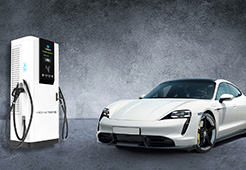
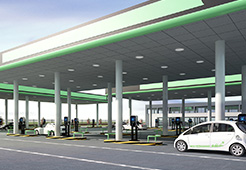


Lead-in: Range Anxiety, the Biggest Hurdle to EV Popularization
Range anxiety has long been one of the biggest obstacles standing in the way of electric vehicle (EV) adoption. Just imagine: you're on a long road trip, watching your range drop steadily. You finally find a charging station, only to wait for dozens of minutes, or even longer. Has this scenario dampened your enthusiasm for EVs? However, BYD's recently launched Megawatt (MW) Flash Charging Technology is trying to turn the dream of "5 minutes of charging, 400 kilometers of range" into reality with a disruptive "energy replenishment revolution". This is not simply "cranking up the power", but an exquisite design that integrates energy storage wisdom, cutting-edge power electronics technology, and systems engineering. Today, let's dissect this black technology that's like a "water tank math problem" to see how it gently treats the power grid while wildly "feeding" your car.
I. Pain Points and Shackles: The "Achilles' Heel" of Traditional Ultra-Fast Charging
Before understanding the breakthroughs of BYD's Megawatt Flash Charging, we need to see the deep-seated bottlenecks facing current ultra-fast charging technologies:
1. The Grid's Pain: The Unbearable "Instant Burden"
What truly limits charging speed is often not the battery itself, but the power grid we rely on. When traditional ultra-fast charging piles (such as 350kW, 480kW) operate at full capacity, they demand huge instantaneous power from the grid. It's like asking your home socket to instantly output the equivalent current of dozens of air conditioners starting at the same time, which creates a huge impact on the local power grid. The high cost and long cycle of grid expansion have made the popularization of ultra-high-power charging stations a difficult task. Worse still, this "hard plunder" approach can easily cause grid fluctuations or even failures during peak electricity demand periods.
2. Battery Limitations: Walking a Tightrope Between Speed and Safety
Increasing charging speed means injecting larger currents (or higher voltages, or a combination of both) into the battery. But large currents bring significant heating issues. Heat not only wastes energy and reduces efficiency, but also accelerates battery aging and even poses safety risks. Finding a balance between "fast charging" and "safety" and "longevity" is an eternal topic in battery technology.
3. The Agony of Experience: Heavy Guns and Cables, Long Waits in Queues
To achieve high power, traditional ultra-fast charging guns often use thicker cables, resulting in bulky gun cables (which can weigh over 4 kilograms), making operation very inconvenient for women or users with less strength. In addition, the total power of charging stations is limited. When multiple cars charge simultaneously, the power is dynamically allocated, leading to a significant drop in the actual charging speed of each car, and users are caught in the double torment of "queuing to charge" and "slow charging".
II. BYD's Answer: An Exquisite "Energy Storage + Charging Integrated" Systems Engineering
BYD's Megawatt Flash Charging Technology (with a peak power of up to 1.5MW) is not an isolated charging pile, but a complete energy replenishment system that integrates energy storage, power electronics, intelligent dispatching, and battery technology. It cleverly bypasses grid bottlenecks, resolves battery challenges, and optimizes user experience. Its core logic actually comes from a classic "water tank math problem".
1. Core Equipment: The Cornerstone of Building a "Mini Power Grid"
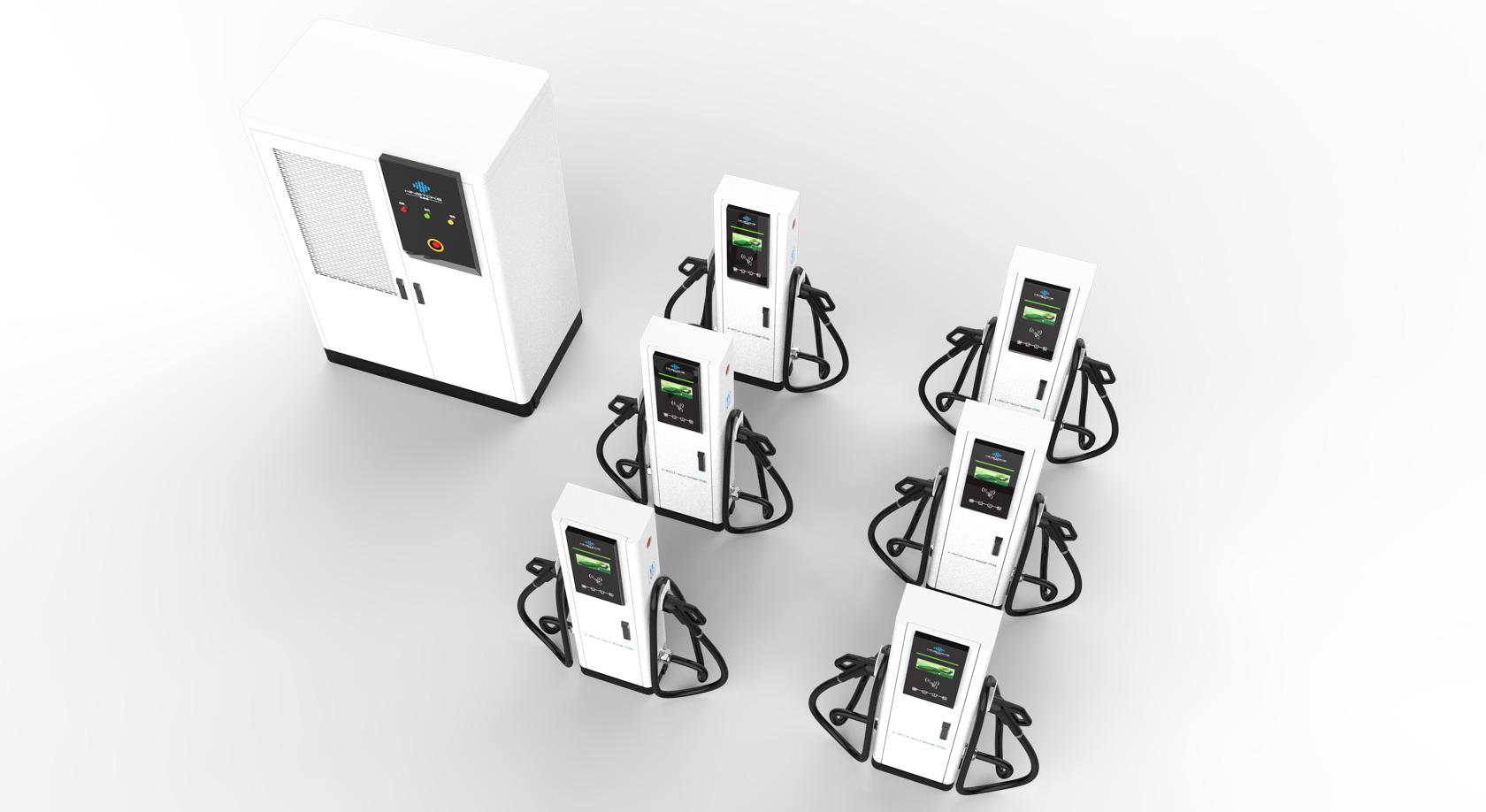
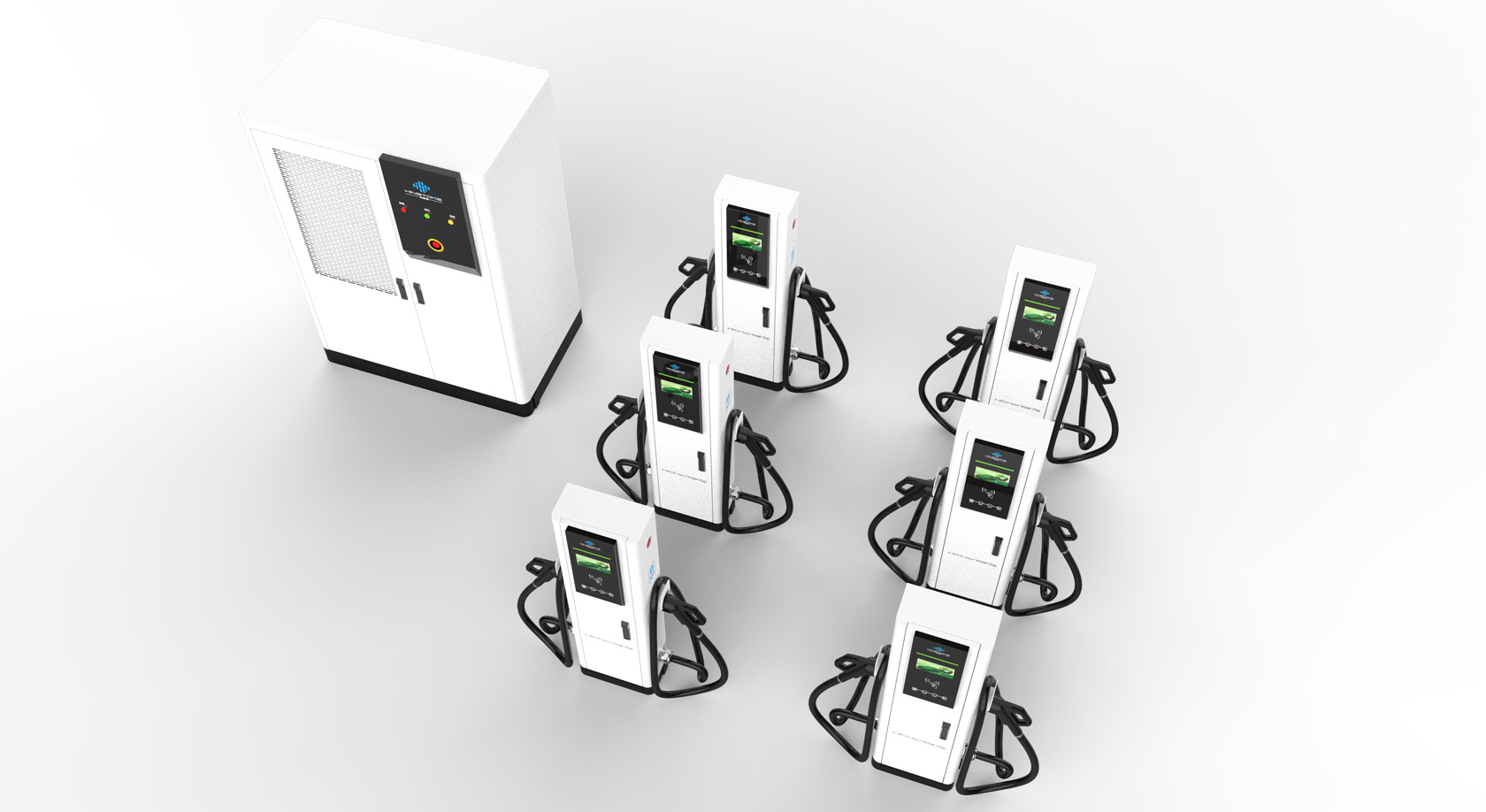
Energy Storage Capacitor Cabinets (2 x 169kWh): This is the "energy heart" and "buffer tank" of the entire system. It uses high-performance capacitor (or supercapacitor hybrid) technology and has a 10C ultra-high rate charge-discharge capability. This means they can be fully charged in an extremely short time (such as 6 minutes) and can also release huge amounts of energy in a very short time. The two cabinets work together like two huge "energy water tanks".
1.5MW Charging Host: The "brain" and "energy allocation center" of the system. It is responsible for receiving alternating current (AC) from the grid, converting it to direct current (DC), while receiving direct current (DC) from the energy storage cabinets, and intelligently integrating and regulating the voltage of the two power sources.
1.5MW Liquid-Cooled Flash Charging Gun: The "last mile" of user experience. It uses advanced liquid cooling technology, which can carry up to 1500 amps of current while greatly reducing the weight of the gun cable to only about 2 kilograms (more than half lighter than traditional ultra-fast charging guns). The T-shaped slide rail design makes it easy to hang and move, and users can plug and unplug it more easily.
2. System Logic: Replicating the Wisdom of the "Water Tank Model"
Remember that math problem from childhood? There's a water tank, an inlet pipe (slowly filling water), and an outlet pipe (quickly draining water). BYD's flash charging station perfectly applies this model to reality:
① "Inlet Pipe" – The Grid Steadily "Trickles In":
The inlet pipe corresponds to the 315kVA box-type transformer connected to the charging station (from the grid). Its power is relatively limited (about 250kW).
Key Strategy: The grid only needs to steadily charge the two energy storage capacitor cabinets with a relatively low power (about 20%-30% of the total power demand, i.e., tens of kilowatts) 24 hours a day. It's like the inlet pipe filling the water tank with a constant small flow, putting no pressure on the water source (the grid) and ensuring the safe and stable operation of the grid. This completely avoids the rough way of "hard plundering the grid".
② "Water Tank" – Energy Storage Dual Cabinets "Relay Energy Storage":
The two 169kWh energy storage capacitor cabinets are the "water tanks". They have a 10C ultra-high rate charge-discharge capability.
Exquisite Design: The two cabinets work in rotation, ensuring that at least one energy storage cabinet is in a "fully charged" state at all times. When a car starts charging and consumes the energy of one "water tank", the grid and the other "water tank" will immediately replenish energy for it. This "relay" mechanism ensures that the charging station has a continuous and stable high-power output capability.
Total "Water Storage Capacity": The two energy storage cabinets plus the continuous energy supplement from the grid, the total energy available in the entire system is about 7560 kWh. Theoretically, it can provide fast energy replenishment services for about 100 cars, effectively solving the embarrassment of "running out of electricity after charging a few cars".
③ "Outlet Pipe" – The Flash Charging Gun "Opens the Floodgates":
The 1.5MW liquid-cooled flash charging gun is that "large outlet pipe". When the vehicle is connected to the charging gun, the system "opens the floodgates".
The peak power can reach 1.5MW (1500kW), which is equivalent to injecting more than 1500 kilojoules of energy into the vehicle per second! Figuratively speaking, it can supplement about 400 kilometers of range in 5 minutes, "running" an average of 2 kilometers per second, truly approaching the refueling speed experience of fuel vehicles.
3. Power Convergence: The "Golden Formula" of 20% Grid + 80% Energy Storage
At the moment of charging, the charging host acts as a "super bartender":
① Two "Base Wines":
One comes from the alternating current (AC) of the grid, which is converted into direct current (DC) through the AC/DC converter in the charging host. This part contributes about 20% of the power (up to about 200kW at peak).
The other comes from the direct current (DC) of the energy storage capacitor cabinets, which directly enters the DC/DC voltage regulation module of the host. This part contributes about 80% of the power (over 800kW at peak).
② Intelligent "Mixing": The host adjusts the voltage of these two DC power sources from different sources (to the range of 200-1000V to match vehicles with different voltage platforms) and then combines them for output. Finally, the gun end can output a peak power of up to 1.5MW.
③ "Buffer Airbag": The energy storage cabinet undertakes the main power output task here, like a huge "power buffer airbag", absorbing the impact on the grid at the moment of charging. The grid only needs to provide a relatively stable small power. This is the core secret of "small grid, large flash charging" – using the "time difference" of energy storage to exchange for the "space difference" of the grid.
III. Empowered by Black Technology: Breaking the Limits of Batteries and Terminals
A smart system architecture alone is not enough. BYD's Megawatt Flash Charging has also achieved key breakthroughs in battery technology and terminal equipment:
1. 10C Ultra-Fast Charging Battery: Let the Battery "Drink Electricity Like Water"
What is C? "C" is the charge-discharge rate. 1C means the battery can be fully charged in 1 hour, 2C in half an hour, and so on. Ordinary fast charging is usually in the range of 1C-2C (fully charged in 30 minutes to 1 hour).
BYD's Breakthrough: Its supporting battery technology has achieved an amazing 10C ultra-high rate charge-discharge capability. Theoretically, the battery can be fully charged in 10 minutes.
How is it Achieved?
Reconstructing Ion Channels: From the battery's positive electrode to the negative electrode, optimize the material structure and electrode design to build "ultra-high-speed ion channels". Greatly reduce ion migration resistance (internal resistance reduced by 50%) and double the ion migration speed.
Withstanding Ultra-Large Currents: The battery can withstand continuous large current input of up to 1000 amps.
Heat Control: The most direct benefit of reduced internal resistance is a significant reduction in heat generation (heat generation reduced by about half), improving safety and battery life.
Full-Range High-Voltage Architecture: The system adopts a 1000V-level high-voltage platform. At the same power, the higher the voltage, the smaller the required current. Compared with the low-voltage, large-current solution, the high-voltage solution can reduce the current demand by about 60%, reduce cable loss by up to 84%, and the overall system efficiency exceeds 99%. Even in an extremely cold environment of -30°C, the charging speed is only about 3 minutes slower than at room temperature, greatly expanding the applicable scenarios.
2. Liquid-Cooled Ultra-Light Gun Cable: Experience "Effortless Handling"
Challenge: Transmitting 1.5MW of power (1500A current @ 1000V), traditional air-cooled gun cables would be extremely bulky (possibly over 5kg), making operation difficult.
Solution: Adopt advanced liquid cooling technology. Design a closed coolant circulation channel inside the gun cable to efficiently dissipate the heat generated by large currents.
Result: While carrying 1500A of current, the weight of the liquid-cooled ultra-fast charging gun cable is controlled to only about 2kg, more than half lighter than traditional ultra-fast charging guns.
User-Friendly Design: Cooperating with the T-shaped slide rail dual-gun terminal, the gun cable can be easily suspended and moved. Users only need to gently push to insert the charging gun into the vehicle's charging port, and the operation experience is as easy as using an ordinary fuel nozzle. A single terminal covers an area of only about 1.5 square meters, saving space.
IV. Seamless Switching: An "Uninterrupted Power Supply" to Ensure Experience
Any technology needs to consider extreme situations. BYD's Megawatt Flash Charging also has a complete response mechanism:
Scenario: When encountering extreme situations (such as multiple cars charging at high power continuously, the energy storage power is temporarily exhausted, and the grid cannot replenish it in time).
Response: The system will automatically and seamlessly switch to grid direct supply mode.
Effect: At this time, the charging power will drop to the level of 400-600kW (which is still the level of current mainstream ultra-fast charging). The key is that the charging process will not be interrupted, and users will hardly feel the switch ("seamless"). The vehicle will continue to replenish energy, but at a slightly slower speed, avoiding user anxiety caused by sudden power outages.
V. Beyond Technology: Moving Towards a New Era of "Equal Speed Between Electric and Fuel Vehicles" in Energy Replenishment
The significance of BYD's Megawatt Flash Charging Technology goes far beyond just a faster charging pile:
1. Grid-Friendly Infrastructure: It provides a highly feasible and economical solution to the contradiction between the construction of large-scale ultra-fast charging networks and the grid's carrying capacity. It reduces the dependence of charging stations on grid transformation and accelerates the popularization of ultra-fast charging networks.
2. Leap in User Experience:
Speed Revolution: "400 kilometers in 5 minutes" compresses charging time to a level comparable to refueling, completely rewriting the experience of long-distance travel in EVs.
Easy Operation: The ultra-light liquid-cooled gun greatly improves user-friendliness.
Stability and Reliability: The energy storage system ensures continuous high-power output capability, reducing the troubles of queuing and power sharing; seamless switching ensures uninterrupted basic charging services.
3. Driving Industry Progress: It integrates ultra-high-rate battery technology, high-power power electronics technology, and intelligent energy management technology, representing the leading strength of Chinese enterprises in the core technology field of EVs, and sets a new benchmark for the development of global EV energy replenishment technology.
4. Optimizing Energy Utilization: The energy storage system can be combined with renewable energy sources such as photovoltaics, storing energy during off-peak electricity prices and releasing it during peak periods, further optimizing the energy structure and reducing operating costs.
Conclusion: A Symphony of Wisdom and Power
BYD's Megawatt Flash Charging is not a brute force that blindly pursues power figures. It is a product of the perfect combination of wisdom and power. It uses the ingenuity of the "water tank model" to gently resolve the burden on the grid; it uses the black technology of 10C batteries and high-voltage architecture to "feed" the battery violently yet safely; it uses liquid-cooled light guns and intelligent dispatching to carefully care for user experience. It proves to us that the future of EVs is not only about extending range, but also about a complete revolution in energy replenishment experience. When "5 minutes of charging, 400 kilometers of range" becomes the norm, and plugging and unplugging the charging gun is as easy as refueling, the last experience gap between fuel vehicles and EVs will be bridged. BYD's "flash charging revolution" is accelerating our journey towards a truly "equal speed between electric and fuel vehicles" new era. On your next long road trip, perhaps you will no longer be anxious about finding a charging station, but look forward to experiencing the technological charm of "instant full power".

- Home
- About Us
-
Products & Solutions
- News Center
- Quality & Service
- Contact Us